
Warrant Records in Arenac County
A warrant is a signed court order. It lets police arrest a named person, search a place, or bring someone back before a judge. In Arenac County, warrants come from the 81st District Court, the 23rd Circuit Court, and the judges who sit over them. The county sheriff and local police then carry the order out. That split matters. The court creates the warrant, but the sheriff holds the enforcement side.
There is no public Arenac County warrant list online. The sheriff's office page gives contact details and a jail description, yet it does not expose a warrant search database. The county website does not post an active-warrant roster either. So a search here means using official fallback channels rather than typing a name into a county portal. Those channels include the sheriff's phone line, the Michigan case search system, and a public records request.
Warrant status can change fast. A judge may issue one in the morning and recall it the same afternoon once a person appears or pays. Because no county page tracks that in real time, calling the office that holds the record is the surest way to confirm whether a warrant is active.
Types of Arenac County Warrants
Not every warrant works the same way. Courts issue several kinds, and each one arises from a different event. Some follow a police investigation. Others follow a missed court date or an unpaid fine. Knowing the type helps a person understand why a name may be flagged and which office to contact.
- Arrest warrant - issued when a prosecutor and judge find probable cause that a person committed a crime, allowing police to take that person into custody.
- Bench warrant - ordered by a judge from the bench when someone misses a court date, ignores a summons, or fails to follow a court order.
- Search warrant - authorizes officers to search a specific place for named evidence, based on a sworn statement of probable cause.
- Capias or failure-to-appear - a hold order that directs officers to secure a person who did not appear or did not pay as the court required.
Most warrants a resident asks about are bench warrants tied to district court matters. Traffic tickets and misdemeanor cases are the common triggers. The next sections explain how those arise and how to check for them.
How to Check for an Arenac County Warrant
Because no county portal lists warrants, the search runs through a chain of official contacts. Start with the office most likely to hold the answer, then move to the next if you come up empty. The sheriff enforces warrants, the courts issue them, and the county clerk handles formal records requests. Each one is a separate stop.
- Call the Arenac County Sheriff's Office at 989-846-3002 and ask whether a warrant is on file for a named person. This is the fastest first step.
- Search the Michigan Courts case search by party name to spot cases with bench-warrant or failure-to-appear docket events.
- Check the 81st District Court case lookup for traffic and misdemeanor matters that may have triggered a bench warrant.
- File a Freedom of Information Act request with the county if the office will release warrant status in writing.
- Contact the Arenac County Prosecuting Attorney for context on a pending felony or misdemeanor charge tied to the warrant.
A phone call often settles the question in minutes. A case search adds the docket history behind a warrant, which helps a person or an attorney see the charge, the court, and the next hearing. Use both when the answer is not clear from one.
Note: Warrant status is not always visible in the public case view, so confirm anything you find online with the sheriff or the issuing court.
Bench Warrants in the District Court
The 81st District Court is where most local bench warrants begin. This court handles misdemeanors, civil infractions, small civil claims, evictions, garnishments, and felony arraignments and preliminary exams. When a defendant misses a hearing or skips a required payment, the judge can issue a bench warrant on the spot. Traffic cases are a frequent source. A ticket left unpaid or a court date left unmet can move a routine matter into warrant territory.
These warrants stay active until the person appears or the court clears them. Clearing usually means going before the court, paying what is owed, or posting any bond the judge sets. The district court can accept bond in some situations, and the county uses Allpaid for court costs, fines, and bond payments. A person who thinks a bench warrant is out for them should not wait, because the warrant does not expire on its own.
Felony matters follow a heavier path. The district court holds the arraignment and the preliminary exam, then the case can move to the 23rd Circuit Court. An arrest warrant in a felony case reflects a prosecutor's charge and a judge's finding of probable cause, not a missed hearing. The Arenac County criminal court records page covers how those charges and hearings appear in the full case file.
Requesting Arenac County Warrant Status
Since there is no online search field for warrants, a formal request fills the gap. The county's FOIA process runs through the county clerk, who serves as the FOIA coordinator. A written request should name the person and give enough detail for staff to locate the record. Michigan FOIA lets agencies withhold some law-enforcement material, so a warrant request may return a status answer rather than the full file. The information below is what a request needs, not a portal you log into.
| Information to Provide | Type | Required | Notes |
|---|---|---|---|
| Full Name of Subject | Text | Yes | Legal first and last name; helps staff match the correct person. |
| Date of Birth | Date | Helpful | Narrows results when names are common. |
| Case or Ticket Number | Text | No | Speeds the search if the matter is already in a court case. |
| Requester Contact | Text | Yes | Name, address, and phone for the reply. |
| Delivery Method | Choice | Yes | Mail, email, or pickup, as the county form allows. |
The county's FOIA packet says staff have five business days to answer a request, with a possible ten-day extension. Copy and labor costs may apply under the county cost worksheet. For law-enforcement records, expect the exemptions in the statute to shape what comes back.
What an Arenac County Warrant Record Shows
When a warrant surfaces through a court case or a records reply, it carries a standard set of fields. These describe who the warrant names, why it issued, and what a person must do to resolve it. The exact layout varies by court, but the core data below appears across most Michigan warrant and case records.
| Field | What It Shows |
|---|---|
| Warrant or Case Number | The court file that ties the warrant to a charge or infraction. |
| Issue Date | The day the judge signed and ordered the warrant. |
| Named Person | The subject of the warrant, usually with a date of birth for matching. |
| Charge or Reason | The offense, the missed hearing, or the unpaid obligation behind the order. |
| Bond Amount | The money or terms a judge sets for release, when bond applies. |
| Issuing Court | The district, circuit, or probate court that entered the warrant. |
| Status | Whether the warrant is active, recalled, or served. |
Not every field is open to the public. Michigan court rules control access to court files, and some warrant detail stays limited until the warrant is served. A docket may show that a bench warrant was issued and later recalled without printing the full order.
What to Do If You Have a Warrant
A warrant does not go away on its own, and it can lead to arrest during a routine stop. Acting early almost always beats waiting. The safest path starts with legal advice. An attorney can confirm the warrant, learn the charge, and often arrange a court date or a surrender on terms rather than a surprise arrest. For a bench warrant tied to a missed hearing or an unpaid fine, resolving the underlying matter is what clears the order.
Voluntary surrender is common once a lawyer sets it up. The person appears before the court, the judge addresses the warrant, and bond may be posted so the person can leave while the case continues. The county accepts bond and fine payments through Allpaid for many matters. Anyone booked into custody during this process becomes a local jail matter, and the Arenac County inmate records page explains how custody information is confirmed.
Important: Talk to a lawyer before you turn yourself in, since an attorney can protect your rights, explain the charge, and often arrange bond ahead of time.
Anonymous Tips in Arenac County
Research did not find a dedicated Arenac County Crime Stoppers page or a published tip-reward line on the county website. Rather than list a number that may not exist, the honest route is the sheriff's office directly. Someone with information about a wanted person can call the Arenac County Sheriff's Office at 989-846-3002 and ask how the office prefers to receive tips.
Sheriff's staff can explain whether a report can be left without a name and how a tip is handled. For an emergency or a crime in progress, 911 remains the right call. General non-emergency information about a warrant subject belongs with the sheriff, who enforces the order.
Statewide Public-Safety Lookups
Several state tools sit alongside a warrant check, though none of them is a warrant list. They track custody, supervision, and registry status instead. Reading them the right way keeps expectations realistic. A warrant means a court wants a person; these tools show where a person already stands with the state.
The Michigan State Police run a public registry that many residents confuse with a warrant tool. You can view it on the Michigan Public Sex Offender Registry, a related public-safety lookup rather than a warrant search.
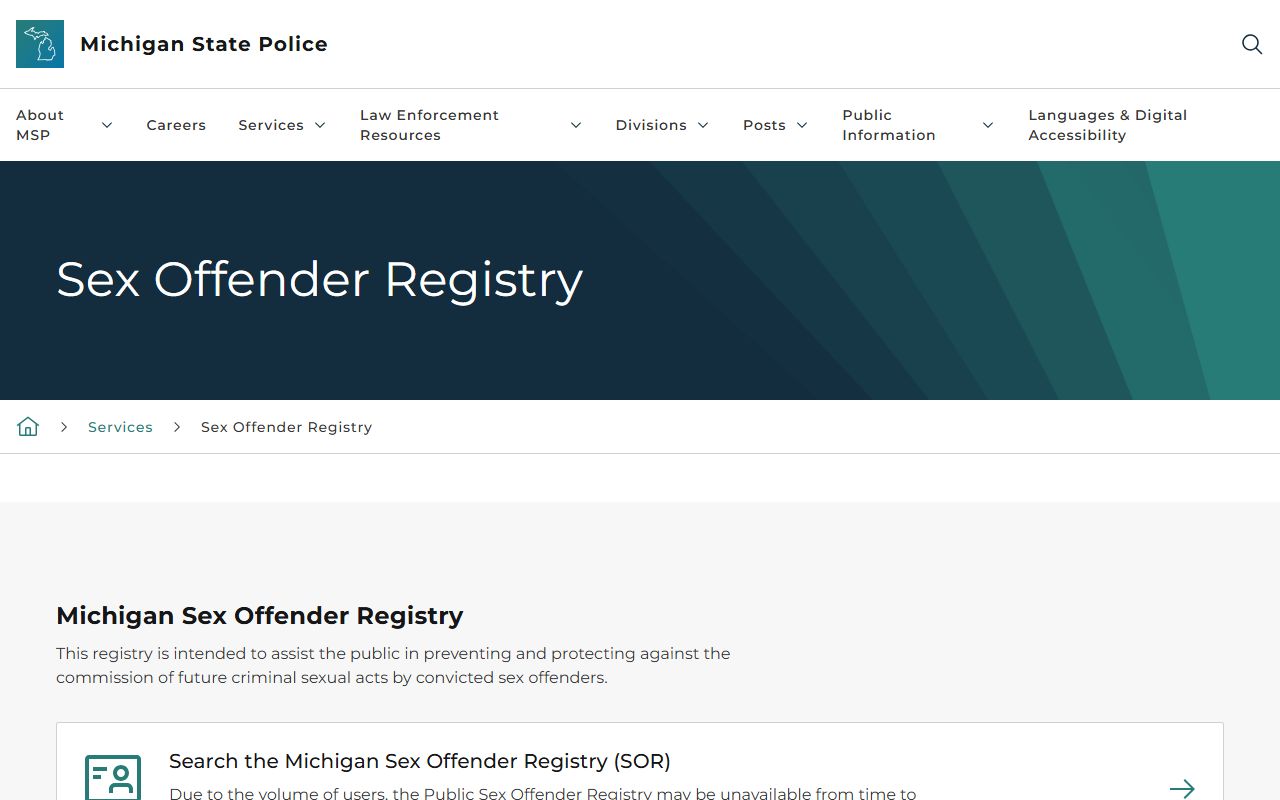
The registry lists people required to report under state law, with location and offense data, and it is not tied to any active warrant. Two more state systems round out the custody picture. The Michigan Offender Tracking Information System, known as OTIS, covers prisoners, parolees, and probationers under state supervision, plus people discharged within the past three years. It is not a county jail roster and not a warrant list.
For custody alerts, Michigan VINE sends notifications about an offender's status. VINE is a notification layer, not a warrant database. Used together, these tools answer custody and supervision questions that a warrant check cannot.
Restricted Arenac County Warrant Records
Some warrants stay out of public view by law. A sealed warrant, often a search warrant tied to an active investigation, may be withheld until it is served or a judge unseals it. Michigan FOIA exemptions let agencies hold back certain law-enforcement records, which is why a request can return a status answer rather than the full document. Court rules, not the county FOIA packet alone, govern most court-file access.
Juvenile warrants sit under tighter limits. State law keeps juvenile case records open only to people with a legitimate interest, so a routine public search will not return them the way an adult docket might. Family and mental-health matters carry similar privacy protections through the probate and circuit courts.
Federal warrants are a separate system entirely. They do not appear in Arenac County court files or on the county site. Federal cases run through the United States District Court, and federal case access goes through PACER. Keeping the state and federal tracks apart avoids a common dead end when a county search turns up nothing.